
Insights on brand marketing + operations.
Practical thinking on building businesses systematically. Written by people who automate their own marketing and operations before recommending systems to others.

The Informed Founder Salary
Founders don't have to leave their own pay to hope. Using the 4% rule, this piece reframes founder salary as a plan you design, not a placeholder you wait on.

What Should We Teach Engineers When AI Does the Code Writing?

Engineering-Backed Vibe Coding
Your AI Prompt Is Not the Problem
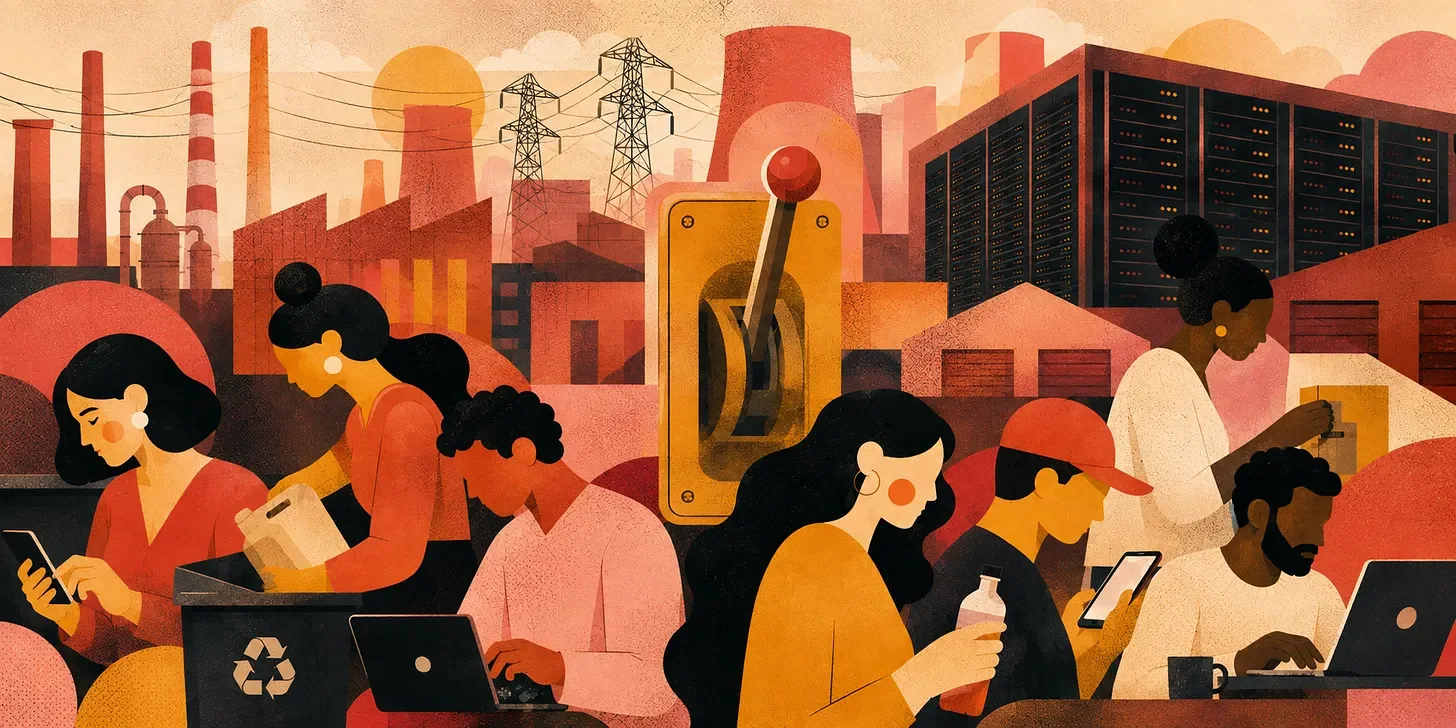
There is a story about AI and the planet: it is burning through electricity and water at planetary scale, so the responsible thing is to stop using it. That story points the finger at the wrong thing, and we have seen this play before. It was called recycling.

What Gets Remembered
Small and medium-sized business is one of the widest labels in marketing, spanning a solo consultant and a four-hundred-person company under the same three letters. This piece makes the case for narrowing that lens before reaching for scale, and offers a framework for doing it with precision.

How We Work

The Referral Ceiling Is Real
A referral network only holds so many people. The close rate stays great long after the room stops filling, which is why nobody sees the ceiling coming until they've already hit it.

The Group Text That Became the Operating System
They called asking for a project management tool. What we found was a group text with over a thousand messages, and one person answering all of them.

The Office Manager Who Was the Whole Intake System
They came looking for AI. They left with a better intake process. AI came later.

Say the Number: What Founders Really Pay Themselves
Founders share their financial models with strangers in every pitch meeting. What we pay ourselves stays in the room. Twenty years and three companies in, I'm starting a series on the numbers we never say out loud, starting with the hardest one: what to pay yourself in year one.

Eleven Weeks In: The Marketing Philosophy We Keep Circling Back To
Read one at a time, each post was its own idea. Read together, they kept landing on the same few beliefs. A recap of what we've been writing about marketing this summer, and the philosophy underneath it.

Nine Weeks In: What Changed in AI This Summer
Read one week at a time, each post was a snapshot. Read together, they tell a different story. A recap of what actually shifted in AI from mid-May to mid-July, and the five things worth doing about it.

A Framework for Growing Off-Script
Growth rarely follows the plan you set out with. The best teams don't fight the detour, they build for it. A framework for staying agile when the road doesn't match the map.

The Last Six Percent

Optimizing Marketing Funnels. The Pause Is Doing More Work Than the Data
The data doesn't decide for you. This week: using AI to analyze funnels from more than one angle — then giving the decision room to sit before acting on it.

A look at AI imagery, one year apart.
A year ago, AI-generated images were captivating from a distance and revealing up close, the hands always gave it away. We put the same test to today's tools. Here's what changed, and what still gives it away.

The Week AI Stopped Feeling Free
A fintech worker spent $81,267 on AI in a week. It is the whole week in miniature. Here is what the cost reckoning, ChatGPT ads, and AI customer service mean for your business.

When to Respond, And When to Lead
The founders building something that lasts are not the fastest responders. They are the ones who know when to pause. In a world optimized for speed, the ability to pause before you move is your competitive edge.

AI's Real Bill Came Due This Week. It Went Beyond Jobs.
Everyone spent the week bracing for AI to take their jobs. The data pointed somewhere quieter and more expensive: your power bill, how people get their information, and the skills gap opening up around you. Here is what actually mattered, in plain language.

The AI Ad Breakdown
ChatGPT opened a self-serve ad platform, no agency required, no minimum spend. Here's what's different about advertising in a conversational AI context, and why early movers have an edge.