
What Happens When 7 Tasks Become 1.
Less Repetition. More of the Work You Actually Love.
AI In Marketing with Ashley | Issue #4
We can either be at war with technology or we can invite it in and decide how it fits. At BAMPT, we're in the second camp. Not because AI is a magic fix, but because the right automation, in the right place, at the right time, genuinely changes what's possible for a business.
That said, AI is the second step to getting your ducks in a row.

What this actually means for your business
Before innovation can work, the fundamentals have to be solid.
AI amplifies what's already there.
Image, Midjourney. Curated and Designed by Ashley Etling
Get the Foundations Right First
Every business runs on a set of fundamentals. Who your customer is. What you're selling and at what price. How your team operates. How your brand shows up. These aren't glamorous topics, but they're the difference between AI automation that creates real leverage and AI automation that just speeds up a broken process.
Before you implement anything, take an realistic look at these four areas:
Brand Identity. Is your brand clear, consistent, and recognizable? AI can amplify your brand, but it can't define it for you.
Product and Product Operations. Is your product or service something people genuinely want, priced correctly, and delivered well?
Marketing and Sales Operations. Do you have a clear path from awareness to conversion? AI can optimize that path, but the path needs to exist first.
Team. Do the right people have the right roles? Automation removes repetitive work from your team's plate, but it doesn't replace the judgment, relationships, and creativity only people can bring.
Once these are solid, you're in a great position. Not because everything is perfect, but because you know your foundation. And that's when AI automation starts to show its real value.

Image Made With Midjourney, Curated by Ashley
Look for the Patterns
Here's what we do with every business we work with at BAMPT: we look at the whole operation, find where time is being spent, and identify the patterns.
Patterns are the tasks that happen the same way, every single time. A new lead comes in and seven things happen. A client onboards and the same six steps occur. Content goes out every week and someone manually does the same four tasks to make it happen.
Those patterns are opportunities. Opportunities to build a system that handles the repetition so the people on your team can focus on the work that actually requires them.
Think of it this way: 7 tasks become 1. You set up the system once. It runs every time after that.
So What Are AI Automations, Exactly?
An AI automation is a system that watches for a specific event, big or small, in your business. For example, a new lead, a signed contract, a form submission, a scheduled date and then automatically runs a sequence of tasks in response.
For operations, this looks like:
When a lead fills out your form, they shouldn't wait. When a client signs, the next steps shouldn't depend on someone remembering to take them. The work that happens after a yes — the follow-ups, the forms, the scheduling, the check-ins — all of it can run on its own. That's what we build. So your team can focus on the work that actually needs them.
For marketing, this looks like:
A new lead enters your world → they're followed up with personally and promptly, without you lifting a finger. A prospect wants to connect → they book, get reminded, and hear from you after — all handled by the system. A client joins → from the moment they say yes, their onboarding experience is warm, consistent, and completely automatic.
The common thread: something that used to require a human doing 7 separate tasks now requires a people doing 1, setting up the system. Everything else runs on its own.
What Changes and What Stays the Same
While it would be amazing if automation changes everything, sadly It doesn't.
What changes: the time your team spends on repetitive tasks. The consistency of your follow-up. The speed of your operations. The amount of mental overhead required to keep things moving.
What stays the same: your relationships. Your judgment. Your creativity. Your brand voice. The human parts of your business, the parts that actually inspire people to choose you. They get protected, because you finally have the time and energy to focus on them.
AI doesn't replace what makes your business inviting. It removes what was getting in the way of it.
Where to Start Today
You don't need a big budget, a tech team, or a full strategy to begin. You just need to notice the patterns.
ONE. Pick one process that repeats. A weekly task, a client onboarding step, a follow-up sequence. One thing that happens the same way every time.
TWO. Write out every step in that process. All of them. Most people discover there are more steps than they realized — and most of them don't need a human.
THREE. Ask: which of these steps could run automatically if the right trigger existed? That's your first automation opportunity.
FOUR. Book a free session with us. We'll map it out with you, no pitch, just a real look at what's possible for your business right now.
AI automation isn't about moving fast or chasing the latest tool. It's about building smarter, one workflow at a time. That's what we do at BAMPT. And we'd love to do it with you.
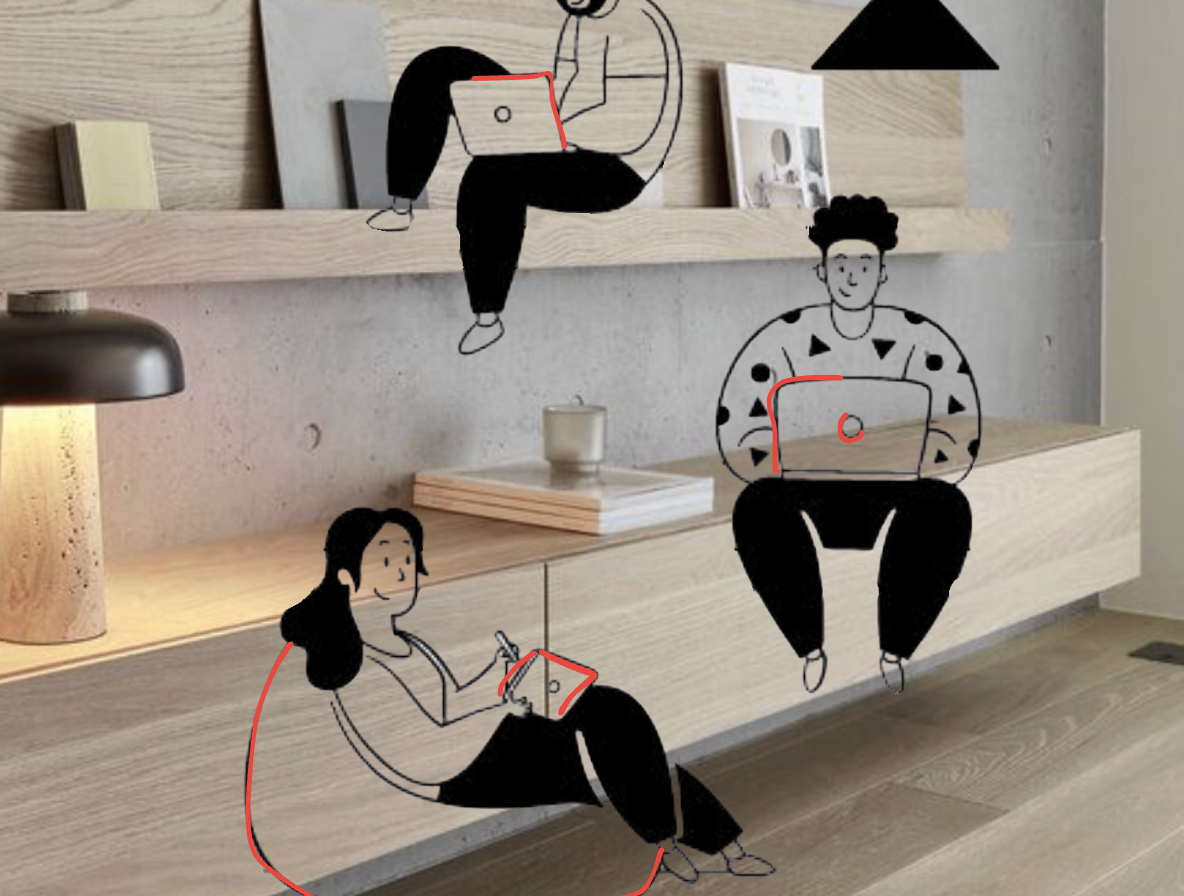
BEHIND THE SCENES | AI Imagery + Human Generated
We're always playing with AI tools. This one is Ashley's — a background scene and layered illustration built in Canva, then animated in Midjourney. Turns out the two work really well together.
Chantal and I started Bampt to help growing businesses from ecommerce brands, to agencies, and professional services teams get the same AI advantage that enterprise companies are building right now. We build and implement AI workflows that make building your business easier and more profitable, with the speed and personal attention that a big agency simply can’t offer.
Chantal covers the week’s top AI news. I cover what it means for your marketing. Together, hopefully, we save you a lot of time sorting through the noise.
If someone forwarded this to you, subscribe below. And if it sparked something, I’d love to hear what you’re seeing in your own business — just reply.
See you next week.
— Ashley